Board games for kids don’t have to be long or complicated. The best board games that we’ve found usually last 2-10 minutes per round.
Board games were not an easy sell at my house. Not because my boys didn’t want to play. They did! It’s what happened at the end of the game that was the problem.
If you’ve ever watched a 4-year-old flip the board because someone else got to the finish first, you know exactly what I mean.
This post may contain affiliate links. As an Amazon Associate I earn from qualifying purchases at no extra cost to you. Every click helps keep this site running. Thank you🪀
But I’m a teacher, and I know how much kids get out of a simple game: following rules, waiting for a turn, counting spaces, and (the big one) learning to lose without the world ending.
So we kept at it. This list is the games we’ve played, loved, and fought over, sorted by age (3, 4, 5, and 6).
Want the Toy Rotation Guide?
A free 2-page system for cutting the mess & maximizing playtime sent straight to your inbox.
Why Board Games Are Important for Little Kids
Board games are close-ended play (one of the 11 toy categories in my independent play routine).
Think back to school: a closed-ended question is the multiple-choice test. There’s a right answer and a wrong answer.
Close-ended play has gotten a bad rap lately, and I don’t think it deserves it. Sure, open-ended play is super important for developing creativity and problem-solving skills, but learning that sometimes there’s only one way for the puzzle to go together is of equal importance.
A board game packs a lot of close-ended skills into one box:
- Rules. If nobody follows them, the game falls apart (and kids figure that out fast).
- Turn-taking. Waiting while someone else spins is hard work for a 3-year-old.
- Winning and losing. Learning to handle that at the kitchen table with mom and dad is a lot easier than learning it on the playground.
- Sneaky learning. Counting spaces, matching colors, reading numbers, and planning a move all happen without a worksheet in sight.
Games are one of the 11 toy categories I use to make sure kids get a little of everything. They don’t replace open-ended toys. They round them out.
Our Honest Struggle: My Boys Hate Losing
Both of my boys have had a really hard time with losing. With my oldest, we’re talking complete meltdowns when he lost a game.
That’s not something I wanted to follow him through life, so we leaned into close-ended play on purpose instead of avoiding it… Granted, I questioned this decision often with one temper tantrum after the other.
Today he can accept losing a game of UNO. He doesn’t like it (who does?), but he can handle it.
⭐ The thing that helped most was cooperative games. In a co-op game, everyone plays on the same team. You still take turns and follow the rules, but you win or lose together, so there’s still a meltdown, but in my experience it was of far less magnitude than when one kid won over the other. If your child struggles with losing, start here.
Board Games by Age at a Glance
| Age | Good first games | What they’re practicing | More toys for this age |
|---|---|---|---|
| 3-year-olds | Candy Land, Chutes and Ladders, Count Your Chickens, Don’t Break the Ice | Colors, counting spaces, waiting for a turn | Toys for 3-year-olds |
| 4-year-olds | Hoot Owl Hoot, Noodle Knockout, Found It, Hurry Up Chicken Butt | Simple strategy, following a few more steps | Toys for 4-year-olds |
| 5-year-olds | Race to the Treasure, Kerplunk, The Floor is Lava | Planning ahead, teamwork, steady hands | Toys for 5-year-olds |
| 6-year-olds | UNO, Jenga, Twister | Number and color matching, balance, real competition | Toys for 6-year-olds |
Board Games for 3-Year-Olds
At 3, keep it simple. The best board games for 3-year-olds have no reading and short turns. For everything else this age loves, see our full list of toys for 3-year-olds.
Candy Land
Candy Land is the classic for a reason. You draw a card, find the color, and move. That’s it. The concept is easy enough that even 3-year-olds can understand it.
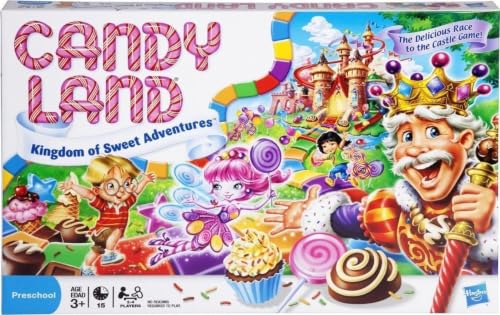


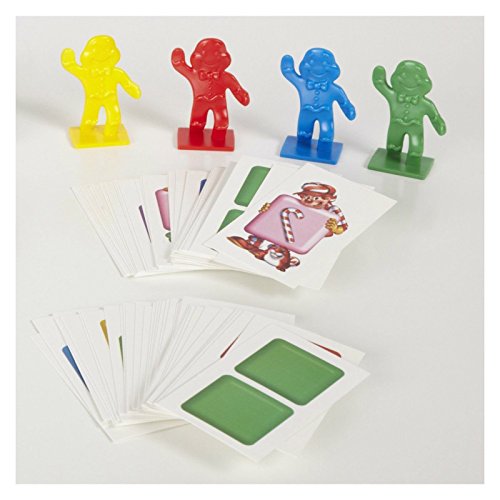
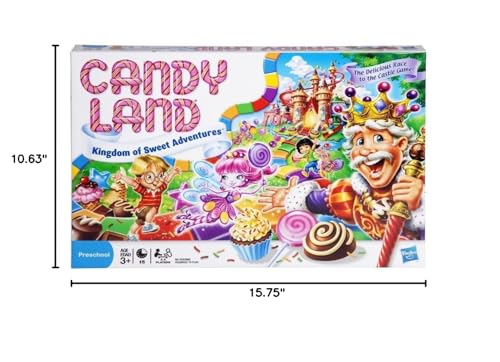
Hasbro Gaming Candy Land
We love board games for close-ended play. Especially easy concepts like Candy Land, that even 3 year olds can uderstand and play.
Chutes and Ladders
Chutes and Ladders adds counting: kids spin and count the spaces as they move.


Hasbro Gaming Chutes and Ladders
Chutes and Ladders is close-ended play that practices following rules, turn-taking, and win or lose concepts. I also like that there is counting involved with counting spaces.
- NO READING REQUIRED TO PLAY: For kids ages 3 and up, Chutes and Ladders can be a great game for kids who haven't learned how to read yet
- KIDS CAN PRACTICE NUMBERS: Children can practice counting and number recognition as they travel along the gameboard to get to the top
Board Games for 4-Year-Olds
Four is when games start to get a little more interesting. Board games for 4-year-olds can add simple counting. Kids can handle a couple more steps, remember whose turn it is, and start making simple choices instead of just spinning and moving.
It’s also, in my experience, peak meltdown-when-you-lose age, which is why Hoot Owl Hoot is my top pick for 4-year-olds. More ideas are in our toys for 4-year-olds guide.
Hoot Owl Hoot
Learn to play as a team and work together for a common goal (sounds like a good life skill, huh?).
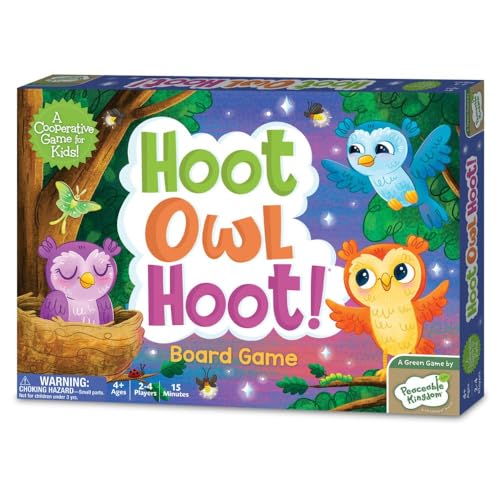
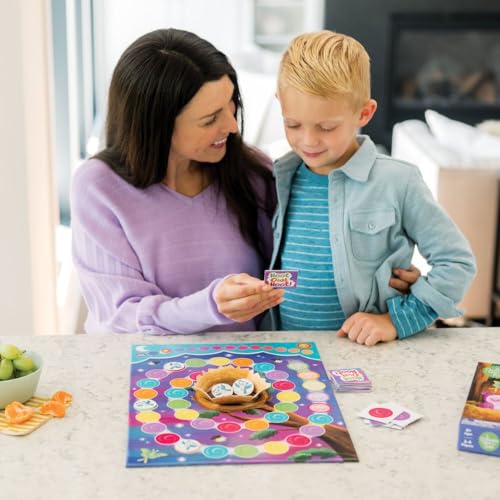
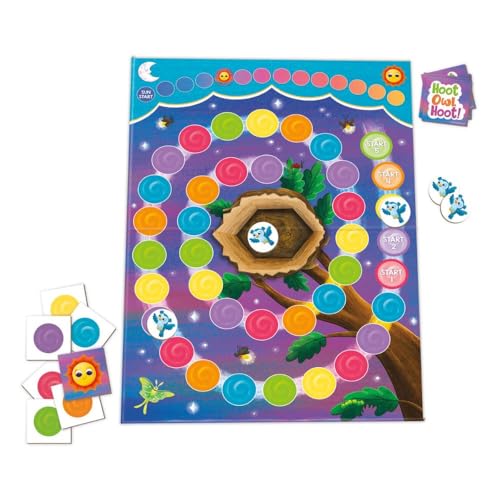


Peaceable Kingdom Hoot Owl Hoot Cooperative Game
Close-ended games can also be cooperative games (where you win or lose as a team). I love co-op games for my kids who struggle with winning and losing.
- Players work cooperatively against a common obstacle to win!
Noodle Knockout
I bought this on a whim, and my kids have loved it for years. It’s a silly noodle-themed game with a lot of different ways to play, all explained in the rules.


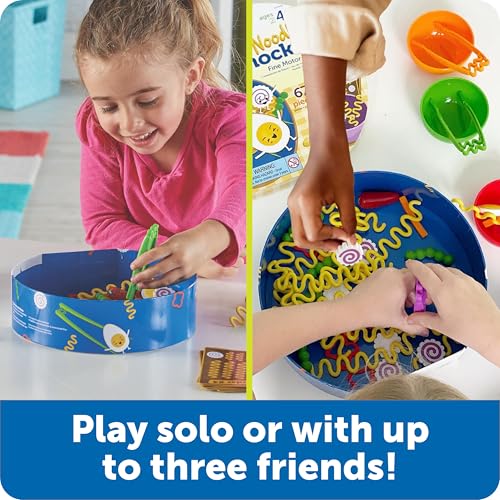

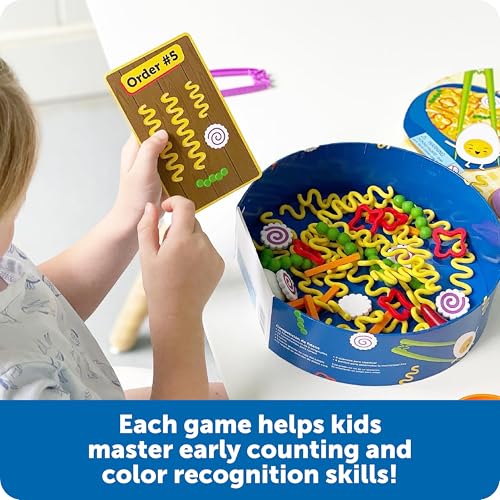


Learning Resources Noodle Knockout
I bought this on a whim and my kids have loved it for years. There are so many ways to play this game (all explained in the rules) that we haven't even played every type!
- FINE MOTOR DEVELOPMENT: Kids build hand strength, dexterity, and handeye coordination as they use chopsticks to grab wiggly noodles and toppings; a fun fine motor skills toy for preschoolers
- MULTIPLE WAYS TO PLAY: Features three game variations that grow with kids ages four and up; supports two to four players and works as an engaging family board game or classroom activity
- SENSORY SATISFACTION: Soft, wiggly noodles and colorful toppings create handson play kids love, keeping young players engaged during fun games that build early skills
- COMPLETE 67 PIECE SET: Includes noodles, toppings, spinner, order cards, bowls, and chopsticks; everything needed for interactive play at home, school, or group playtime
- EDUCATIONAL ENTERTAINMENT: Builds early counting, color recognition, sorting, and turntaking through creative pretend play, making this a popular learning game for kids and preschool classrooms
Board Games for 5-Year-Olds
By 5, a lot of kids can think one move ahead, work as a team, and (sometimes) lose a round and ask to play again.
Five-year-olds are also getting ready for kindergarten, where waiting your turn and listening to other people’s ideas are a big part of the day. For more, check out our list of toys for 5-year-olds.
Race to the Treasure!
Players work together to build a path to the treasure before the ogre gets there. Because everyone is on the same team, kids have to listen to each other and talk through their choices.
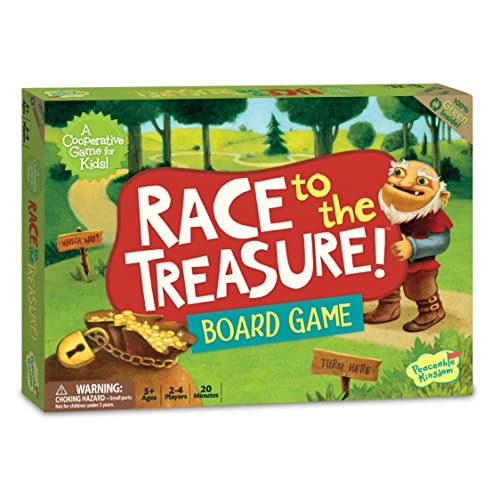


Peaceable Kingdom Race to the Treasure! Cooperative Game
Kids can learn to work together toward a similar goal. This teaches empathy, listening to others, and seeing other points of view.
- Players work together to beat the Ogre to the treasure by creating a path from start to finish; if they are successful everyone wins!
- Children learn strategy and social development skills with no reading required
You Might Also Like
Board Games for 6-Year-Olds
At 6, kids are starting to care a lot about friends, teamwork, and doing things on their own, and games are a great place to practice all three.
They can handle games with more rules and more real competition. That’s also when the classic family games come out. Our toys for 6-year-olds guide has the rest of what this age loves.
Jenga
Jenga is a classic fine motor game. It also works for a big range of ages, so older siblings, cousins, and grown-ups can all play together. The crash at the end is half the fun.


Hasbro Gaming Jenga
A classic fine-motor game that teaches about close ended play like following rules, turn-taking, and winning and losing.
UNO (in card games) and Twister (in active games) round out our 6+ picks.
Cooperative Games: Peaceable Kingdom
We love Peaceable Kingdom Games because they are so easy to play, and they are cooperative. They are made for 3-year-olds and up.
If you’re thinking, “there’s no way my crazy 3-year-old is going to sit through a game,” I thought the same thing! Yet, from the very first play, he surprised me!


Peaceable Kingdom Count Your Chickens Cooperative Game
Board games are a great way to introduce close-ended toys. They can follow rules, take turns, and either win or lose.
- COOPERATIVE COUNTING PLAY: Removes competitive pressure and teaches little ones how fun teamwork can be. Players work together, count their moves, and celebrate every chick they bring back to the coop
- MADE FOR LITTLE FARMERS: Created for 2-4 players ages 3 and up. Includes a beautifully illustrated board, premium wooden hen and chick pieces, a chicken coop, spinner, and easy instructions. Average play time is about 15 minutes
Peaceable Kingdom Hoot Owl Hoot Cooperative Game
Close-ended games can also be cooperative games (where you win or lose as a team). I love co-op games for my kids who struggle with winning and losing.
- Players work cooperatively against a common obstacle to win!
Peaceable Kingdom Race to the Treasure! Cooperative Game
Kids can learn to work together toward a similar goal. This teaches empathy, listening to others, and seeing other points of view.
- Players work together to beat the Ogre to the treasure by creating a path from start to finish; if they are successful everyone wins!
- Children learn strategy and social development skills with no reading required
Active Games That Get Kids Moving
Not every game has to happen at a table. Active games cover the same rules and turn-taking as a board game, but they also build balance, coordination, and strength.
They’re my go-to on rainy days when everyone needs to burn off some energy. Our gross motor toys guide has even more ways to get kids moving indoors.
The Floor is Lava!
We love this game. It takes the childhood classic and turns it into an actual game with rules, and bonus, it saves your couches and coffee tables from getting trampled. My only complaint: the stepping stones are foam, so they slip on carpet. Play it on a hard floor or a rug with grip underneath.


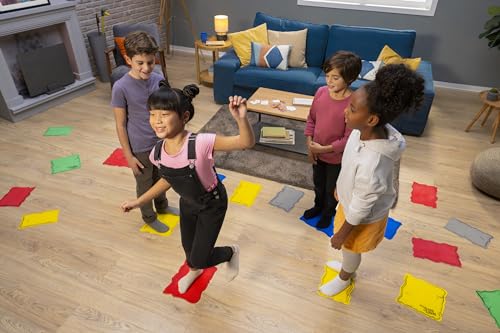


Goliath The Original The Floor is Lava!
We love this game to take a childhood classic like 'the floor is lava,' but save your couches and coffee tables from getting trampled. My only complaint is that the stepping stones are foam, so they slip on carpet.
- ENDLESS GAMES PRESENTS: The Floor is Lava! is a family board game that promotes physical activity, an active imagination, and engaging excitement for kids and adults.
- ACTIVE FUN: Turn every floor into an exciting u201clava jumpingu201d adventure with The Floor is Lava! Get your child up off the couch or away from video games with this fun interactive game!
- EVERYONE LEAP: Real entertainment and laugh out loud fun challenges the whole family. Popular for birthdays, holiday parties, or game night. For 2 or more players ages 5 -105!
- INSIDE OR OUTSIDE PLAY: Each of our cushioned, durable, slip-resistant foam stepping stones can be used during outdoor birthday parties or indoor sleepovers.
Hurry Up Chicken Butt!
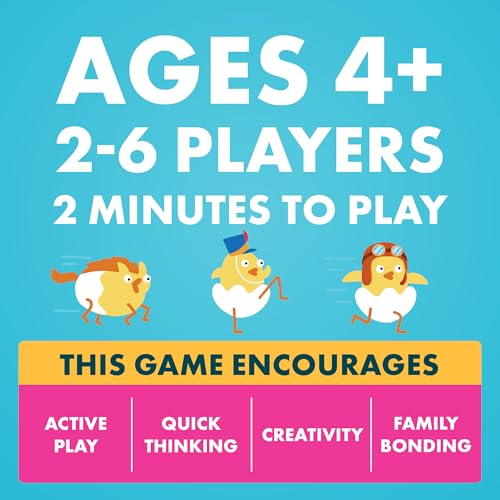
Hurry Up Chicken Butt is super silly, has rules simple enough for young kids, and a whole game only lasts about 5 minutes, so it’s perfect for quick family games. Found It gets kids up and moving around the house on a scavenger hunt.


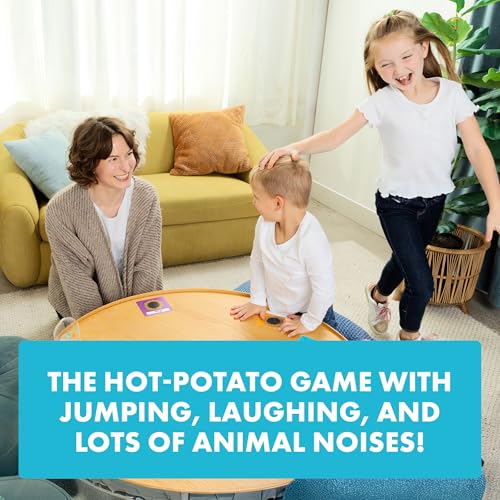
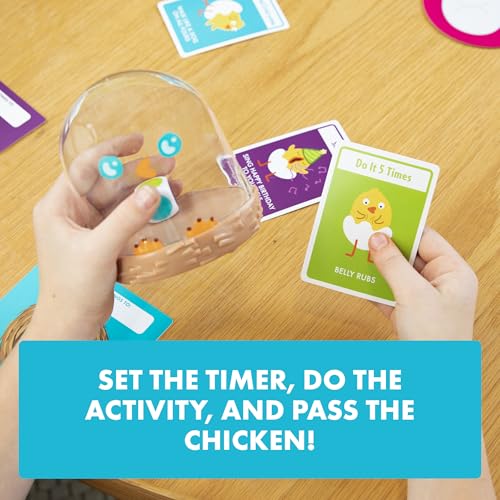

Exploding Kittens Hurry Up Chicken Butt
This game is super fun to get kids up, moving, and being silly! The rules are simple enough to understand, and a whole game only lasts about 5 minutes. Making it perfect for quick family games.
- How to Play: Get ready to jump up and get silly with Hurry Up Chicken Butt!
- Shake the Chicken to reveal your wacky activity, then perform it quickly before passing the Chicken Shaker to the next player
- But watch! if the timer goes off while you're holding the Chicken, you're out!
- This game is fast-paced, unpredictable, and guaranteed to get everyone laughing
Twister
Twister brings back a lot of memories for me, and it’s great for strength, balance, and working together.


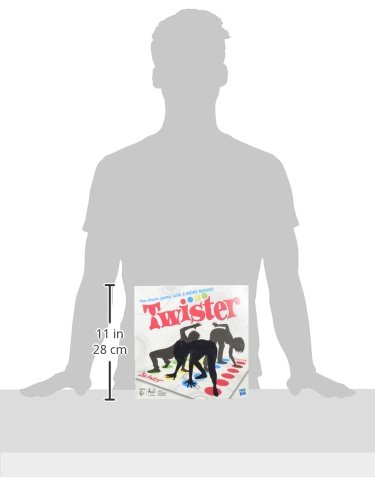


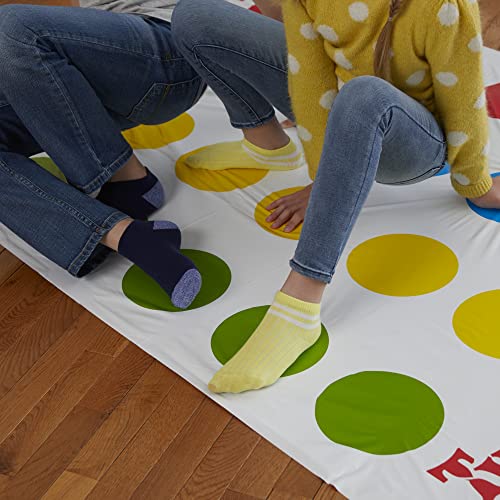


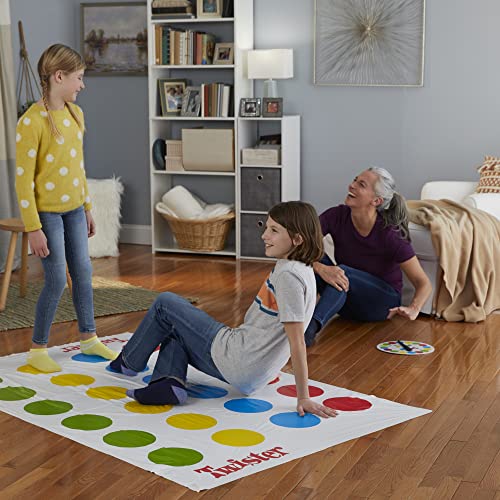


Hasbro Twister
This game brings back a lot of memories, and it is great for gross motor play indoors. It encourages kids to work together, and builds strength, balance, and coordination through play.
Bowling Set
The bowling set is our rainy-day hero: we have a hallway that’s perfect for it, so the pins don’t fly all over the house.


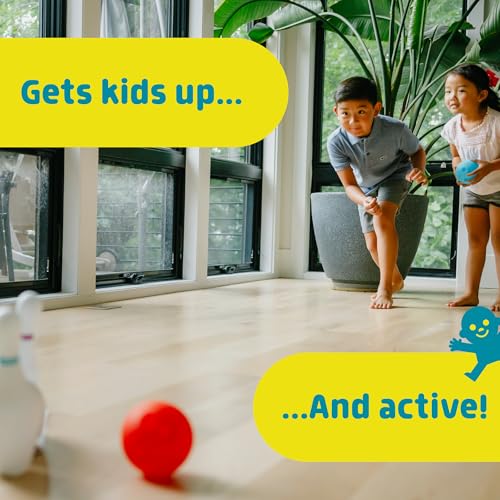


Chuckle & Roar 10-Pin Kids Bowling Set
🛍️ Shop My Amazon Storefront
Every toy, book, and must-have from the site organized and ready to shop in one place.
As an Amazon Associate I earn from qualifying purchases at no cost to you.
Fine Motor Games
Some games sneak in a lot of hand work: pulling sticks, tapping blocks, and pinching small pieces all build the finger strength and control kids need for writing later. If fine motor skills are a focus for your kid, our fine motor toys guide has plenty more.
Kerplunk Disney (ages 5+)
It’s like the classic Kerplunk, without the worry of marbles rolling all over the house. Kids have to pull the sticks out slowly and carefully, which takes a steady hand and a lot of patience.


Mattel Games Kerplunk Disney
Like the classic without the worry of marbles in the house.
- The KerPlunk game kids love featuring the Hi-Tech Edition Buzz Lightyears and crane inspired by Disney and Pixaru2019s Toy Story 5!
- Roll the die and remove a stick of the matching color. If any Buzz Lightyears fall, you must keep them.
- When all the Buzz Lightyears have tumbled down, the player with the fewest wins!
- Clouds on the sticks let colorblind players easily identify which stick to pull.
- Fun for the whole family, kids and adults alike, easy to learn and perfect for family game night or party play!
Don’t Break the Ice
Don’t Break the Ice is a fun game for even the youngest players.


Hasbro® Don’t Break The Ice Game
A fun game for even the youngest players.
- FUN KIDS GAME: This Donu2019t Break the Ice game is an exciting preschool game that has players tapping out ice blocks one by one, as they imagine helping Phillip the Penguin make a new igloo
- FAMILY GAMES FOR KIDS: Get everyone together for family game night with the Don't Break the Ice game. Players will be on the edge of their seats just waiting for the moment that the penguin falls through
Feelings and Social Games
Games are also a great way to talk about feelings, which is a big part of what I call nurturing play: learning to understand and care about other people. Our nurturing toys guide covers the whole category.
Who’s Feeling What?
Several of our favorite toys come from Learning Resources. In this game, a grown-up reads clues about how different people are feeling, and kids have to find the face that matches. It’s a simple setup, but it opens the door to a lot of good conversations.
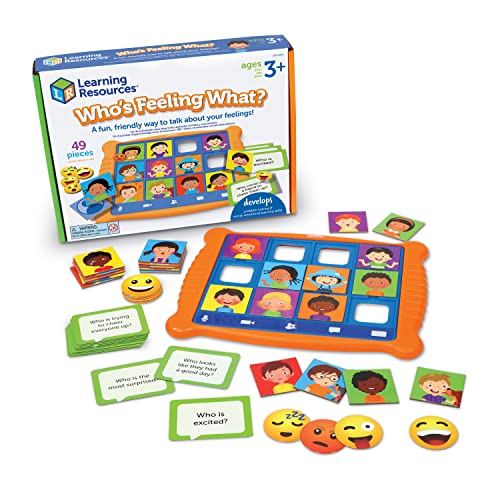

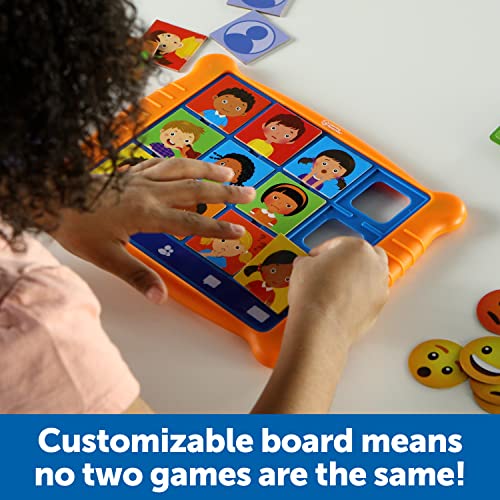

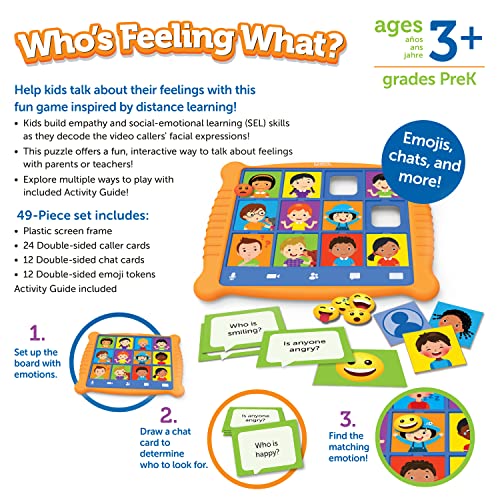

Who's Feeling What? Game
In this game, parents can read clues to their child about how different people are feeling. They have to find the face that matches.
- Spot the Face, Spot the Emotion: Inspired by distance learning, this social-emotion learning game and activity set helps kids strengthen their SEL skills as they match the callers with their feelings!
- Never the Same Activity Twice: With 12 double-sided caller cards and 12 double-sided emotion prompt cards, this communication game for kids lets you design a new game board every time you play!
- A Fun Way to Talk About Feelings: Ready for use at home or in the classroom, Whou2019s Feeling What? comes with an SEL activity guide with ideas on how to use this emotion toy to get kids talking and learning!
- When kids kearn how to recognize, understand, and feel their feelings, they build the skills they need to make friends, master teamwork, and live a happier, healthier life!. school supplies, teacher supplies
Card Games
Card games are small, cheap, and easy to bring anywhere, which makes them one of my favorite travel toys. A deck fits in a purse for restaurants, waiting rooms, and grandma’s house.
UNO (ages 6+)
UNO may be too advanced for some 6-year-olds, but we play it at my house. It’s amazing for color and number recognition, and it covers all the closed-ended basics: follow the rules, take your turn, and win or lose.

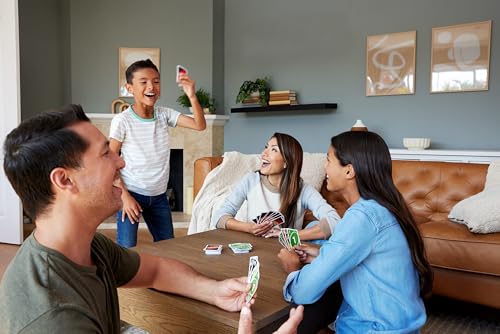


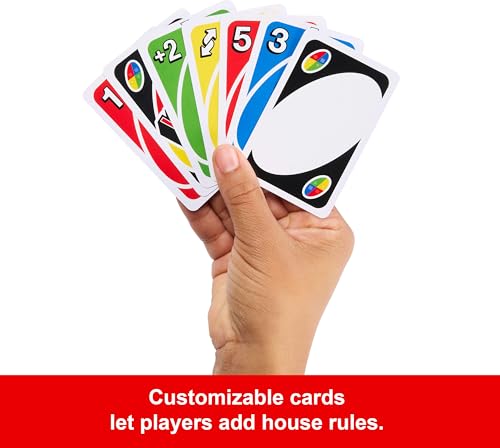

Mattel Games UNO
UNO Might be too advanced for some 6 year olds, but we play at my house. UNO is not only amazing for color and number recognition, but also for close-ended concepts like rule-following, turn-taking, and winning or losing.
- UNO card game provides classic play, where players match colors or numbers in a race to get rid of all their cards!
- The color blind accessible deck has special graphic symbols on each card to help identify its color, allowing players with any form of color blindness to play!
Found It!
This indoor scavenger hunt gets kids up and moving. It’s great for moving around but in an organized way.
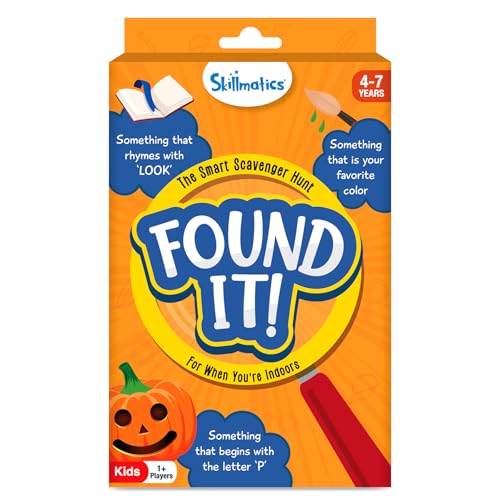
Skillmatics Found It Indoor – Scavenger Hunt
This game is fun for getting the kids up and about, moving around the house.
- INDOOR SCAVENGER HUNT: Turn everyday spaces into a thrilling adventure with Skillmatics Found It!
- ENGAGING & EDUCATIONAL PLAY: Designed for kids ages 4 to 7, this interactive game builds observation, logical reasoning, and creative thinking skills, all while having fun!
- AWARD-WINNING FUN: Winner of the 2023 National Parenting Product Awards (NAPPA)! This engaging card game gets kids off screens and into actionu2014perfect for home, school, and playdates.
How to Teach a Toddler to Play a Board Game
This is the teacher part of me talking. A first game goes a lot better with a little setup. Here’s what I’d do:
- Keep it short. Stop while it’s still fun. A 10-minute game that ends happy beats a 30-minute game that ends in tears.
- Play as a team first. Before you play against each other, play together. Take turns, but talk through every move out loud.
- Teach one rule at a time. Skip the special cards and extra rules the first few times. Add them once the basics feel easy.
- Model losing. When you lose, say it out loud: “Aw, I lost. That’s okay. Want to play again?” Kids copy what they see.
- Make the goal clear. “Get your piece to the castle” is easier to remember than a full rulebook.
- Pick the right time. Not right before a nap, and not when everyone is hungry. Trust me 😂.
And if the board goes flying? Take a break and try another day again. It doesn’t mean your kid isn’t ready for games. It means they’re still learning the hardest part.
Games, Quiet Time, and Toy Rotation
Games are for when you’re around. At our house, quiet time is built on open-ended toys and audio, because those don’t need a parent in the room.
Close-ended toys like games are better saved for times you’re actually available if your kid gets stuck (or needs a referee).
Rotate them like any other toy. Games fall into closed-ended play and are one category in our toy rotation. I keep one or two on the cubby shelf at a time and put the rest away where the kids can’t see them.
Looking for more ideas by age or type of play? Our toy guides page has all of them in one place.
Everything I Recommend, In One Spot
I keep every toy from my site organized in one shoppable Amazon list.
As an Amazon Associate I earn from qualifying purchases.
You Might Also Like
Ready to Take Your Toy Rotation to the Next Level?
A simple two-page system for cutting the mess and making playtime more fun & last longer!
Get StartedFAQ
Candy Land and Count Your Chickens are my top picks. Both skip reading, have very few rules, and are over quickly. Count Your Chickens is cooperative, so it’s a great choice for kids who have a hard time losing.
At 5, kids are ready for a little planning and teamwork. Race to the Treasure is a great cooperative pick, Kerplunk is a fun fine motor challenge, and The Floor is Lava gets everyone moving.
Start with cooperative games, where everyone wins or loses together. Keep games short, model losing calmly yourself, and talk about feelings when everyone is calm, not in the middle of a meltdown. It takes time, and that’s normal.
Many can, but UNO may be too advanced for some 6-year-olds. Try playing with everyone’s cards face up at first so you can help each other find matches, and add the special cards once the basic matching feels easy.
Yes. Board games are close-ended play, so they teach rules, turn-taking, and how to win or lose. Many also sneak in counting, colors, and fine motor practice. They work best alongside open-ended toys, not instead of them.
Usually not. Games need someone to take turns with and someone to help when a kid gets stuck, so we save them for times a grown-up can play. Open-ended toys and audio work better for quiet time.
2 thoughts on “17 Best Board Games for Kids Ages 3 to 6”